Acne-prone skin presents one of the more complex challenges in professional aesthetics. The concern is rarely singular. Active breakouts, post-inflammatory scarring, enlarged pores, and persistent follicular congestion often coexist, and addressing one without aggravating another requires a treatment model that is precise, controlled, and respectful of a barrier that is frequently already compromised.
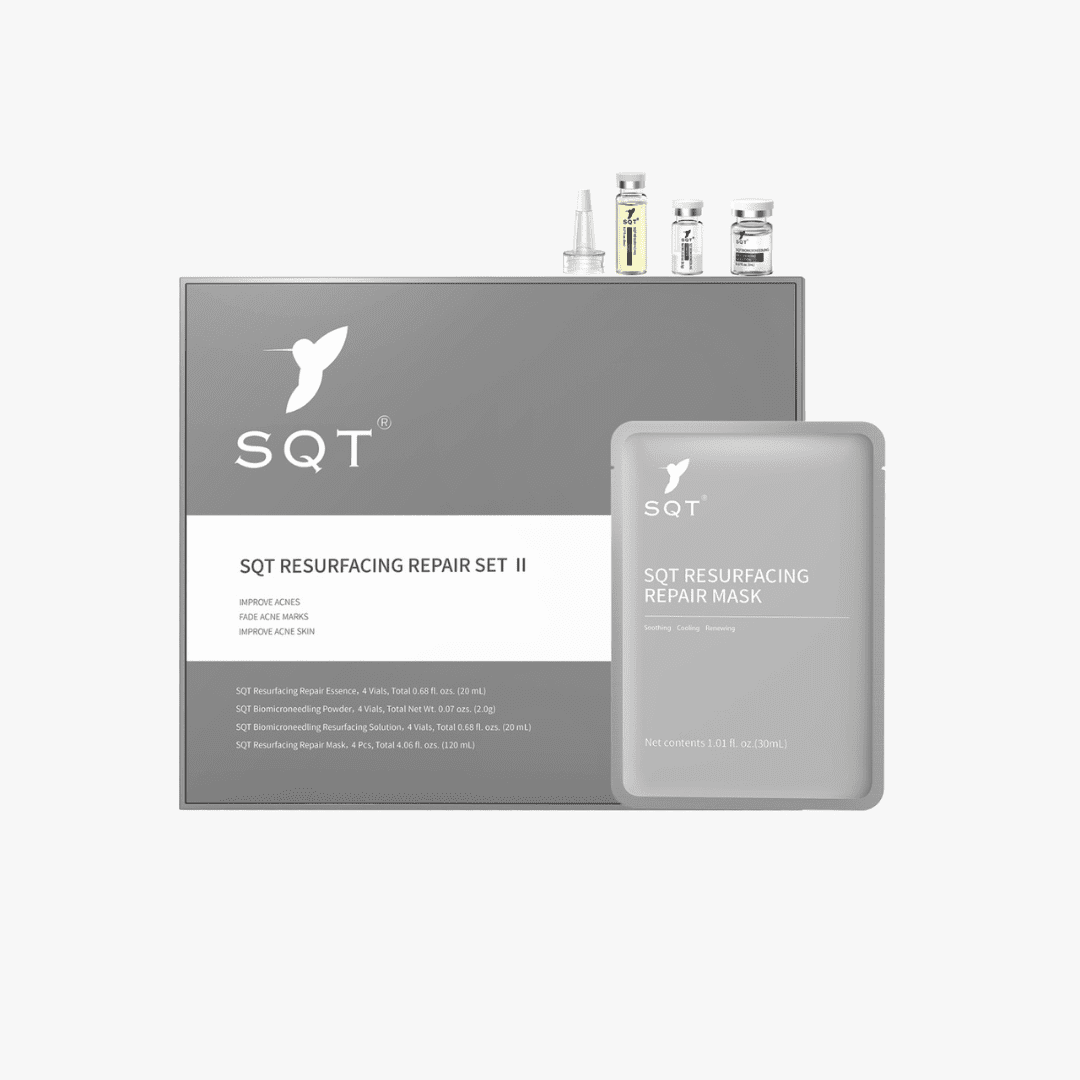
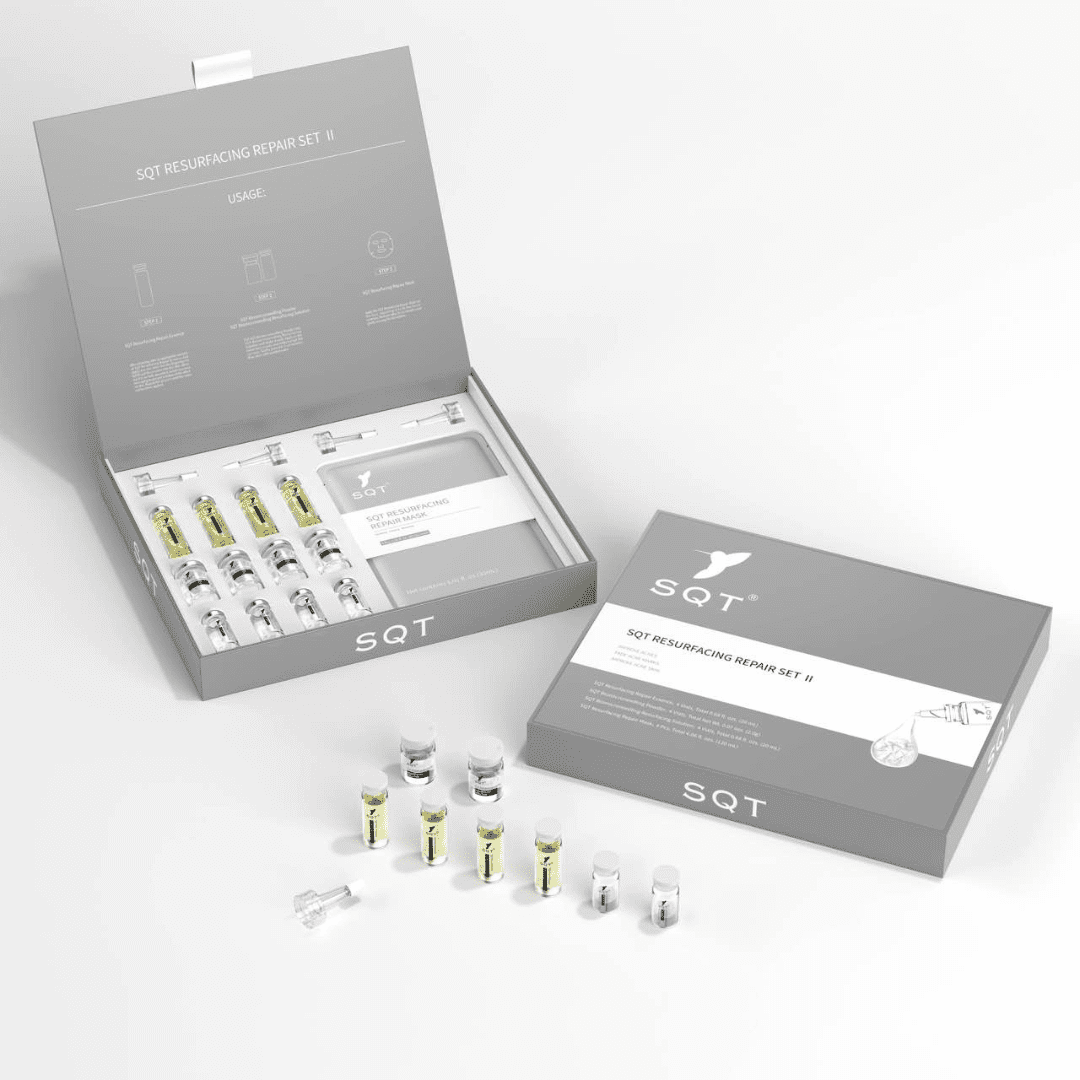
The Resurfacing Repair Set II from SQT Bio Microneedling is designed for exactly this profile. It uses bio microneedling as its primary mechanism, delivering a dense concentration of purified silica spicules to initiate a regenerative signal from within the skin rather than through surface injury. This assessment examines how it works, what the formulation contains, what a realistic course of treatment looks like, and where its limitations lie.
How it works
The foundation of the Resurfacing Repair Set II is mechanotransduction, the process by which a physical stimulus is converted into a biochemical response within the skin. When millions of hydrolysed sponge spicules are applied in a liquid suspension, they integrate into the upper dermal layers and create a sustained mechanical presence. This presence is perceived by the skin as a signal requiring a regenerative response rather than a wound requiring emergency repair.
The distinction between those two responses is clinically significant. A wound response prioritises barrier closure through rapid collagen production, often resulting in disorganised Type III collagen. A regenerative response supports the more structured synthesis of both Type I and Type III collagen fibres, contributing to improved dermal architecture over time. A wound response closes. A regenerative response builds. That difference is visible in recovery time, inflammatory load, and long-term skin quality, which is why the spicule mechanism is particularly appropriate for reactive or acne-prone skin where minimising inflammatory burden is a treatment objective in itself.
Clinical data from S-TDS research suggests this stimulus may compress the standard 28-day cellular turnover to approximately 7 days, supporting an accelerated inside-out renewal cycle. The spicules are understood to remain active within the tissue for up to 72 hours, providing a continuous biological signal rather than a single puncture event. This sustained mechanical engagement without repeated physical injury is the core advantage of liquid microneedling over conventional needling for this skin profile.
What is in it and why
The primary active in the Resurfacing Repair Set II is the hydrolysed sponge spicule, refined to a 99.5% purity standard to minimise the risk of adverse inflammatory responses associated with lower-grade or unrefined sponge materials. The purification process removes organic debris and mineral contamination that can trigger unwanted immune responses in sensitive or reactive skin. In a formulation designed for acne-prone profiles, the purity of the delivery mechanism is as important as the actives it carries.
Niacinamide is included as a well-researched supporting active. A form of vitamin B3 with a broad evidence base in dermatological research, niacinamide supports barrier function, may help reduce the appearance of post-inflammatory hyperpigmentation, and supports sebum regulation in oily skin types. Its inclusion alongside the spicule mechanism is particularly relevant for post-inflammatory hyperpigmentation because the micro-channels created by the spicule application improve niacinamide’s penetration to the deeper skin layers where melanin production occurs, enhancing its bioavailability compared to surface application alone.
A salicylic acid derivative supports follicular clearance through its keratolytic action, loosening the bonds between dead skin cells within the pore lining and addressing congestion through a chemical pathway that complements the mechanical action of the spicules. Its lipid solubility allows it to penetrate the sebum-rich follicular environment more effectively than water-soluble alternatives, making it a well-suited pairing with a follicular-clearance objective. Allantoin is included to support skin comfort during the active renewal phase, promoting cell proliferation and reducing sensitivity during the initial spicule integration period.
Together these actives address the acne and textural concern profile through three distinct and complementary pathways: mechanical signalling through the spicule mechanism, melanin regulation through niacinamide, and follicular clearance through the salicylate derivative. Each pathway addresses a different aspect of the same concern rather than duplicating the same mechanism three times.
What to expect and what to know
During application, a mild to moderate prickly or tingling sensation is typical and confirms the spicules are integrating with the tissue. Temporary redness is common immediately following treatment and generally resolves within a few hours. In the 24 to 72 hours following application, mild sensitivity, tightness, and occasional warmth are normal as the spicules remain active within the skin. Active exfoliants, retinoids, and heat exposure should be avoided during this period. The skin should be kept gently hydrated and protected from UV exposure throughout the renewal phase.
Between days 3 and 7, surface shedding and visible peeling may occur as the accelerated renewal cycle progresses. This varies significantly between individuals and is not always visible to the naked eye. Skin typically feels smoother and appears clearer as the renewal phase completes. A structured course of 3 to 6 treatments, spaced approximately 4 weeks apart, is generally recommended for concerns involving post-inflammatory scarring and persistent congestion, though the treating practitioner will advise based on the specific skin profile and response to treatment.
It is important to approach this treatment with accurate expectations. The Resurfacing Repair Set II is not a treatment for active inflammatory acne in a clinical or medical sense and is not a replacement for appropriate medical management where that is indicated. It is not suitable for skin with active open wounds, known silica sensitivity, or compromised barrier conditions requiring medical management. Individuals with a history of hypertrophic or keloid scarring should consult their practitioner before commencing treatment. Results are cumulative, individual, and influenced by skin type, the number of sessions completed, and the actives used alongside treatment. Maintenance treatments are typically recommended to sustain improvement over time.
The evidence base for the spicule delivery mechanism is well-supported at category level through S-TDS research. The formulation is ingredient-led and mechanistically coherent, addressing the acne and textural concern profile through three distinct pathways. The purity standard is documented. The primary limitation affecting the rating is the reliance on pilot-level and brand-submitted clinical data for product-specific outcome claims, rather than independent peer-reviewed research specific to this formulation. As the evidence base for spicule-based systems develops, this rating will be reviewed accordingly.