The structural changes associated with skin aging are biological rather than cosmetic in origin. Collagen production declines progressively from the mid-twenties, elastin fibres lose their recoil capacity, and the extracellular matrix becomes less organised over time. Simultaneously, a process known as glycation causes existing collagen fibres to cross-link and stiffen, reducing the skin’s capacity for structural resilience. These changes manifest as visible fine lines, loss of firmness, and a reduction in the density that gives younger skin its characteristic quality.
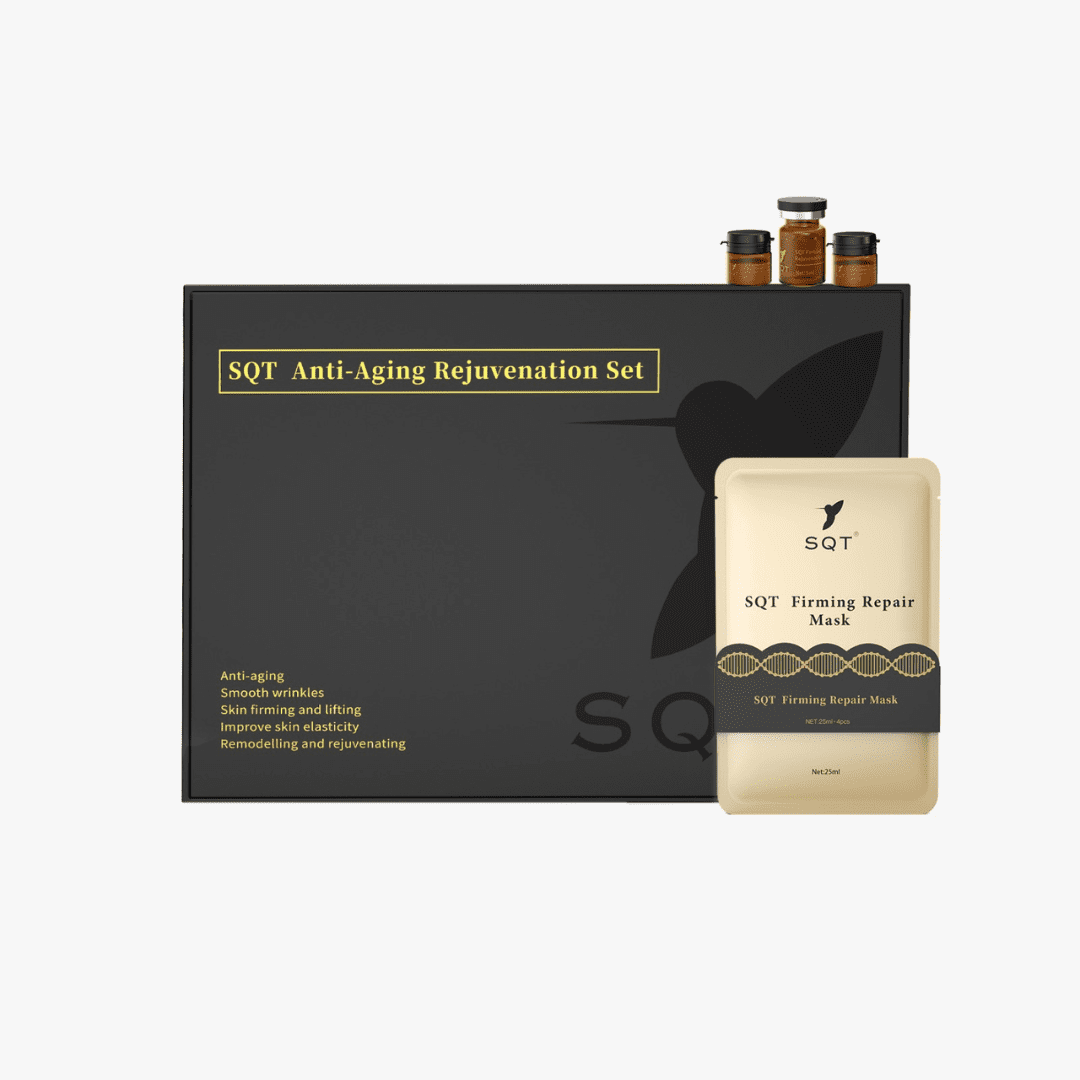
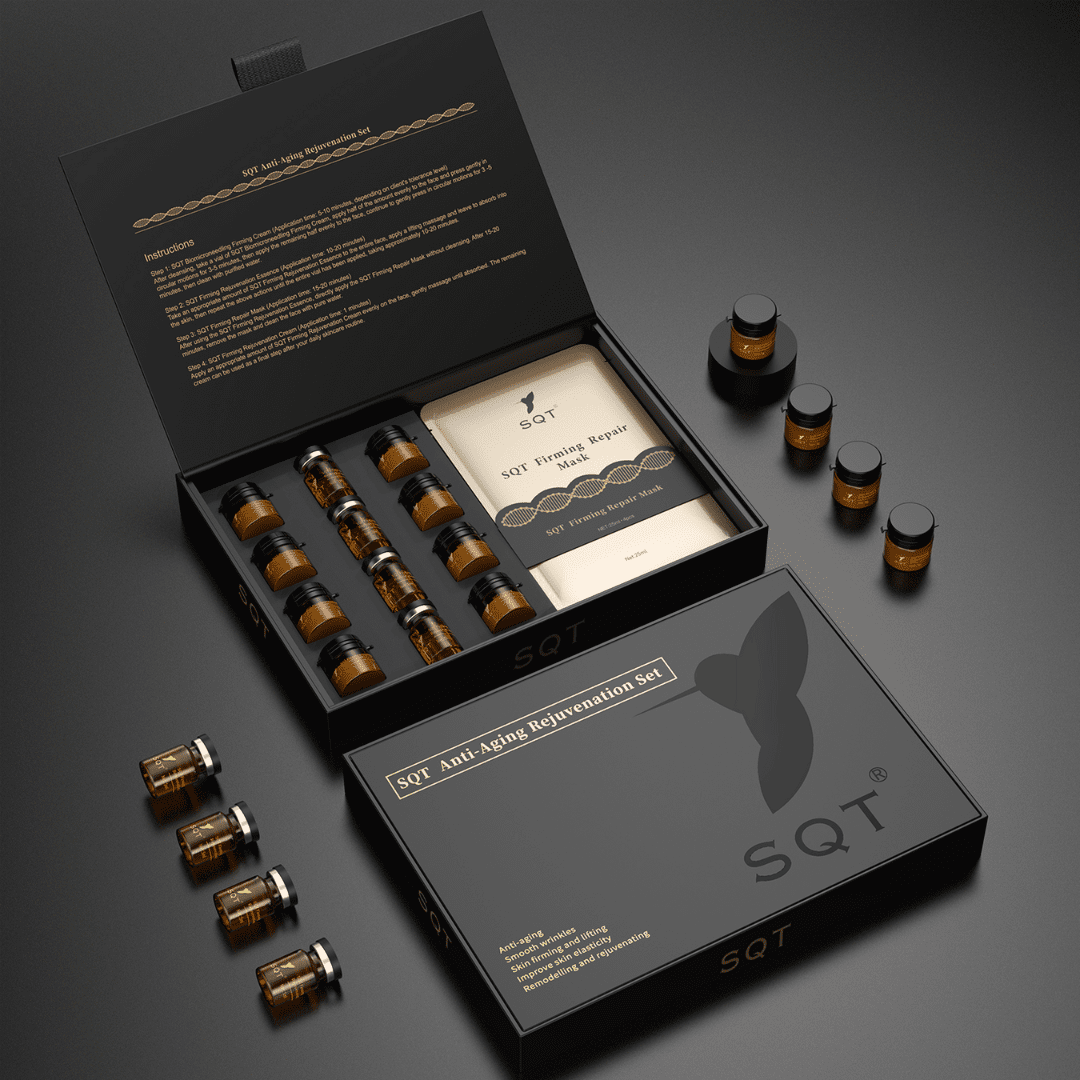
The Anti-Aging Rejuvenation Set from SQT Bio Microneedling addresses this profile through a bio microneedling mechanism, using purified silica spicules to initiate a sustained regenerative signal at the dermal-epidermal junction, supported by a formulation of actives selected specifically for their roles in structural protein support. This assessment examines the mechanism, the formulation rationale, realistic treatment expectations, and where this approach sits within the broader landscape of anti-aging options.
How it works
Fibroblasts are the primary collagen-producing cells in the dermis, and their activity declines with age partly due to reduced mechanical stimulation of the extracellular matrix. This is the biological context in which mechanotransduction becomes clinically relevant in an anti-aging application. As skin ages and loses structural density, the mechanical signals that would ordinarily prompt fibroblasts to maintain their synthetic activity become weaker. The tissue becomes thinner, the extracellular matrix less organised, and the regenerative signals less frequent. The result is a compounding cycle of reduced production and increasing structural depletion.
When hydrolysed sponge spicules are applied in a liquid suspension, they integrate into the upper dermal layers and create a sustained mechanical signal that fibroblasts interpret as a prompt to increase their synthetic activity. This signal is not a wound response. It does not rely on surface injury or emergency repair mechanisms. It is a direct communication with the skin’s structural cells through physical presence, which is the fundamental distinction between liquid microneedling and conventional needling in an anti-aging application. Conventional needling initiates repair. The spicule stimulus initiates renewal.
Clinical data from S-TDS research suggests the spicule stimulus remains active within the tissue for up to 72 hours, providing a continuous biological signal rather than a single treatment event. This sustained engagement is understood to support the synthesis of both Type I and Type III collagen fibres through a more organised pathway than the emergency collagen production associated with wound response. Type I collagen provides the structural density associated with firmness and resilience. Type III collagen contributes to the flexibility of the extracellular matrix. Supporting both through a controlled regenerative signal rather than controlled injury is the mechanistic rationale for the inside-out renewal approach in this application.
What is in it and why
The primary active in the Anti-Aging Rejuvenation Set is the hydrolysed sponge spicule, refined to a 99.5% purity standard. The supporting formulation amplifies the mechanotransduction stimulus with three actives chosen for their complementary roles in the structural aging concern profile. Together they address collagen synthesis, collagen degradation, and collagen protection through three distinct and related pathways.
Palmitoyl tripeptide-1, also known as pal-GHK, is a synthetic peptide that mimics the collagen fragment signal that stimulates fibroblasts to produce new collagen. When collagen fibres break down naturally, the resulting fragments communicate to surrounding fibroblasts that new collagen production is needed. Palmitoyl tripeptide-1 replicates this signal biochemically, prompting fibroblast activity through a chemical pathway that works alongside the mechanical pathway initiated by the spicules. This creates a dual signal for collagen synthesis, one mechanical and one biochemical, acting through related but distinct mechanisms. The clinical significance of this combination is that each pathway reinforces the other rather than duplicating it.
Palmitoyl tetrapeptide-7 addresses a complementary aspect of the structural aging process by supporting the reduction of inflammatory cytokines, specifically interleukin-6, which contributes to collagen degradation over time. Chronic low-level inflammation is now recognised as a significant driver of structural aging, sometimes described as inflammaging, and the inclusion of an anti-inflammatory peptide alongside a collagen-stimulating one reflects a more complete understanding of the aging mechanism than formulations that address only synthesis without considering degradation. You cannot stimulate new collagen production effectively if the inflammatory environment is simultaneously breaking it down. This peptide addresses that side of the equation.
Carnosine provides a documented anti-glycation effect. Glycation occurs when sugar molecules bond to collagen fibres through a non-enzymatic process, causing cross-linking that makes the fibres rigid and reduces their structural function. This is one of the least well-understood contributors to visible skin aging and one of the most difficult to address through conventional approaches. Carnosine acts as a sacrificial substrate, binding to the reactive sugar molecules before they can bond to collagen, protecting the integrity of existing fibres while the spicule mechanism supports the synthesis of new ones. The combination of protection and stimulation across both existing and newly forming collagen is what makes this the most mechanistically complete formulation in the SQT range.
What to expect and what to know
During application, a mild to moderate prickly sensation confirms spicule integration with the tissue. Temporary redness and mild sensitivity are common in the 24 to 72 hours following treatment as the spicules remain active within the skin. Active exfoliants, retinoids, and heat exposure should be avoided during this period. The skin should be kept gently hydrated and protected from UV exposure throughout the renewal phase, as UV exposure accelerates collagen degradation and may reduce the treatment benefit.
Improvements in skin firmness and density are cumulative and typically become more visible after a structured course of treatments rather than following a single session. A course of 4 to 6 treatments, spaced 4 weeks apart, is generally recommended for concerns involving laxity and structural density, though individual response will vary based on age, skin condition, and the degree of structural change being addressed.
It is important to position this treatment accurately within the broader anti-aging landscape. The Anti-Aging Rejuvenation Set is designed to support the skin’s own structural protein production and is most effective for early to moderate signs of elasticity loss. It is not a replacement for injectables in cases of significant volume loss or deep structural change, and it works most effectively as part of a comprehensive approach to skin health rather than as a singular corrective treatment. For practitioners building a multi-modality anti-aging protocol, this product works well as a preparatory or maintenance treatment alongside injectable options rather than as a competing approach.
The mechanism is well-supported at category level through S-TDS research, and the individual evidence profiles of the peptide actives and carnosine are established in the dermatological literature. The formulation logic is the strongest of the SQT range, addressing synthesis, degradation, and protection through three complementary pathways. The primary limitation affecting the rating is the absence of independent peer-reviewed clinical data specific to this formulation combination, and the importance of clear expectation management regarding the distinction between bio microneedling and injectable treatments for significant volume loss. As independent research into peptide-enhanced spicule systems develops, this rating will be reviewed.